
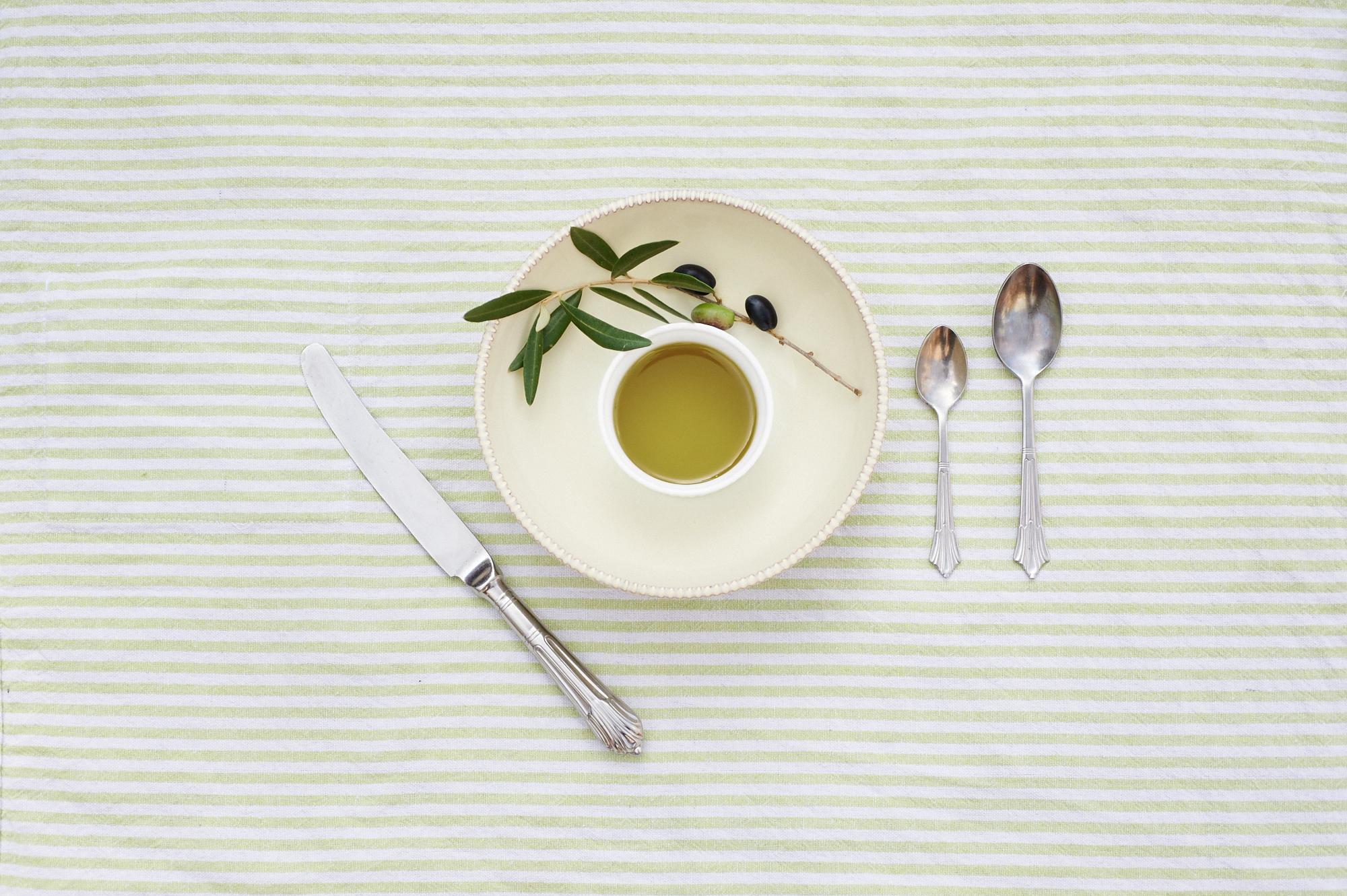
Australia’s Olive Wellness Institute is an excellent resource for all things olivey. Their most recent email includes a guide to detecting quality olive oil:
What factors influence the sensory characteristics of EVOO
- Variety of olive
- Different varieties of olives have different sensory characteristics, and the type of olive that is used to make an oil has the biggest impact on the flavour.
- Some varieties of olives taste more bitter or peppery, while some taste grassy and others buttery
- The combination and blending of different olive varieties into extra virgin olive oil can form new aromas, tastes and ultimately the overall flavour.
- Maturity at harvest
- An olive that is unripe when harvested will likely have more pungency and bitterness, and will develop greener flavours
- Olives that are ripe when harvested are generally less bitter and have a milder and more buttery flavour with riper fruit notes
- Climate and weather
- Where the olives are grown can also affect the sensory characteristics of an oil, although not as much as other factors.
- Different climates have different levels of moisture in the air, and the soil composition and moisture levels may also be different. Temperatures during oil accumulation period is arguably the most important environmental factor affecting olive oil characteristics.
Other factors that can affect the sensory characteristics of extra virgin olive oil include the irrigation practices, and the process of extraction including the method and the temperatures used.
Flavour
The overall flavour of an extra virgin olive oil is influenced by a combination of sensory factors, including the aroma, the taste and the ‘mouthfeel’ or ‘feeling’. The flavour of extra virgin olive oil can vary significantly between different products and may range from light through to robust. No matter the style of extra virgin olive oil, the flavour should always be fresh, and it should never leave your mouth feeling fatty or oily.

- Aroma
Aroma refers to the pleasant sensations perceived by the olfactory organ when tasting food.
In extra virgin olive oil, the aroma should be very pleasant and enticing; predominantly of olive fruitiness, the sensation reminiscent of healthy fresh fruit collected at the optimum harvesting time. The aroma can be intense, like dark greens, sorrel, grassy, herbaceous, green banana or tomato, or it can be softer such as apple, pear, fresh nuts and tropical fruit.
The aroma should be balanced and harmonious. See below for a list of aromas commonly found in extra virgin olive oil.
- Taste and ‘Feeling’
The taste, as the aroma, in good quality EVOO should be very fresh, pleasant and clean, the sensation reminiscent of healthy fresh fruit. It may also be associated with other aromas of familiar foods such as green vegetable or tomato or banana, citrus or salad leaves.
When tasting oil, after the taste two more sensations follow, firstly bitterness, then soon after, pungency. These are considered positive characteristics of Extra Virgin Olive Oil as long as the levels of them do not overpower the level of fruitiness, thus giving the oil an unbalanced profile. It is important that the flavour of high-quality oils be well balanced.
Fruitiness
- Set of varietal characteristics from sound, fresh olives, either ripe or unripe
- Fruitiness can be detected in both the nose and the mouth
Bitterness
- Bitterness is a taste that is due to the fresh unripe olives used to make the oil, which have a bitter taste
- How bitter the oil is will depend on how ripe the olives were when they were harvested (and other factors such as the variety of olive used)
- Bitterness is perceived on the back of the tongue
Pungency
- Pungency is a biting tactile sensation perceived in the throat or tingling sensation perceived on the tongue
- This sensation is often described as ‘peppery’ and may make you cough
- The pungency of extra virgin olive oil is due to the presence of the polyphenols, specifically oleocanthal. The more polyphenols, the more pungent the oil will be.
Complexity and Persistence
- Complexity is defined as an interesting and diverse range of aromas and flavours
- Persistence is defined as the length of time that the flavour is perceived after swallowing, it is associated with the aftertaste
- Both of these characteristics are essential in competition shows but not in a supermarket range
How to conduct an EVOO tasting
Extra virgin olive oil comes in multiple styles, and different styles have different aromas, tastes and mouthfeels. A tasting is a great way to experience the sensory characteristics of high-quality extra virgin olive oil. Follow the steps below to conduct your own tasting at home or with friends.
- Step 1: Choose the right glass
- In professional oil tastings, an opaque blue glass is used in order to hide the colour of the oil.
- This is because contrary to popular belief, the colour of the oil does not influence the flavour or the quality
- For at home tasting, it’s not necessary to use a blue glass – you can use any small glass or even a wine glass
- Step 2: Prepare the oil
- Pour roughly 1 tablespoon of the oil into your glass
- Hold the base of the cup in one hand and use the other to cover the opening
- Swirl the oil gently a few times
- This warms the oil and allows the aroma to be released
- Step 3: Smell
- Uncover the top of the glass, and take slow deep breaths to evaluate the aroma of the oil
- Sniff gently for no longer than 30 seconds
- For a list of common aromas see the ‘flavour’ tab.
- Step 4: Taste
- Take a small sip of oil and distribute around the mouth. Allow it to spread slowly over the back of the tongue and throat
- Take short successive breaths to draw air in through the mouth. If it sounds like you are slurping the oil, then you are doing it correctly
- This helps spread the oil through your mouth and allows the flavours and aromas to be released
- Swallow at least a small amount of the oil – it is important to swallow the oil so you can assess the pungency
- Close your mouth and breathe out through the nose (to allow the volatile compounds to be perceived retronasaly).
- Do you feel any stinging or tickling in the back of your throat when you swallowed the oil? Does it make you cough?
- Step 5: Cleanse your palate
- After tasting one oil, it’s best to cleanse your palette
- A thin slice of apple or sparkling water is an ideal palette cleanser
Repeat with a variety of different extra virgin olive oil varieties!
Extra Virgin Olive Oil Varieties
Many people are unaware that there are different ‘flavours’ or ‘varietals’ of extra virgin olive oil, but in fact there is a rich diversity of colour, flavour and aroma. Generally, extra virgin olive oil is categorised into three different styles – light, medium and robust. Each of these styles have unique sensory characteristics and can be used for different culinary occasions.
- Light/delicate
A light EVOO has a lighter and more subtle taste, and usually uses olives harvested in the later stages of ripeness. The lower polyphenol content means it is less bitter, and less likely to give a ‘hard’ aftertaste.
- Flavours and aromas:
- Ripe fruit and tropical notes
- Absence of “hard” character in the aftertaste
- Light bitterness and pungency
- Polyphenols <100ppm
Lighter varieties of extra virgin olive oil are perfect for use in baking, as a butter substitute, or when you want the flavour of the other ingredients in the dish to be the star.
- Medium/Classic
A medium EVOO generally uses a combination of olives harvested in earlier and mid-stages of ripeness. You may feel a light tingling in the back of the throat when tasting, and the flavour will be more pronounced than in light varieties.
- Flavours and aromas:
- Fruity
- Mix of ripe and green fruit
- Medium/moderate bitterness and pungency
- Phenols 100-250ppm
Medium varieties of extra virgin olive oil are good all rounders and can be used for everyday cooking, and on vegetables.
- Robust
A robust EVOO will have a much stronger/bolder flavour and will likely have a peppery aftertaste.
- Flavours and aromas:
- Peppery
- Typically ‘green’ characters
- Unripe fruit aroma
- Firm bitterness and pungency
- Real flavour depth on the palate
- You may experience a tickling or burning feeling in the back of your throat when tasting robust varieties
- Phenols >250ppm
Robust varieties of extra virgin olive oil are perfect for cooking hearty dishes like casseroles and roasts. It also works well when drizzled over cooked meals, or in salad dressings and marinades